

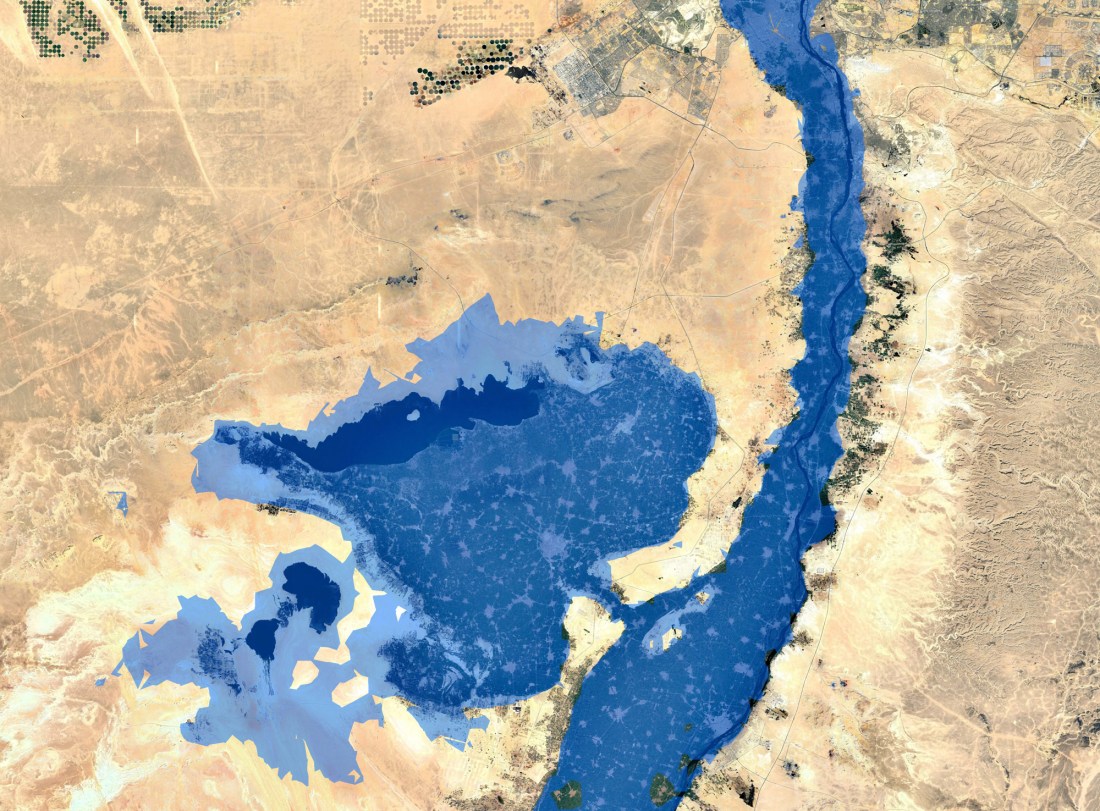
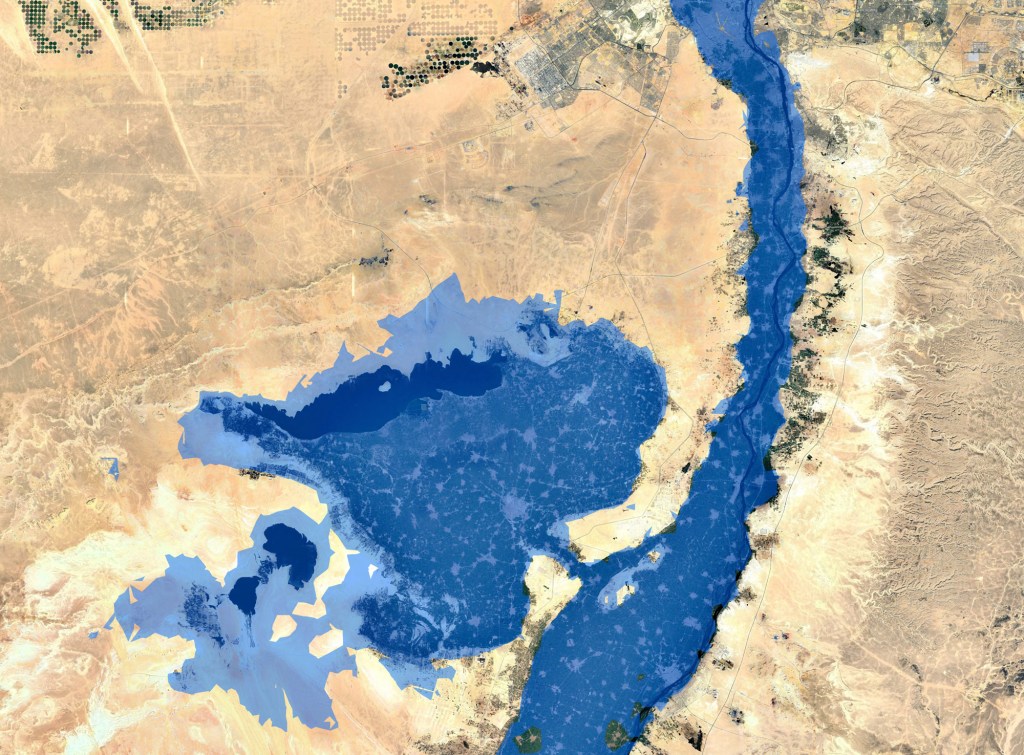
What if the Egyptian pyramids weren’t built in a desert — but on the shore of a vast ancient lake that no longer exists? A new analysis of the entire 200-kilometer pyramid corridor reveals a striking pattern: every pyramid sits above 30 meters ASL, every causeway points toward it, and every valley temple sits at or below it. One water level. Two hundred kilometers. Zero exceptions. The geological record confirms it, the wave-cut scarps prove it, and the paleolake dating brackets it to 12,000–15,000 years ago — roughly three times the accepted age of the pyramids. This is not a reinterpretation of existing theory. It is a original engineering and systems analysis that changes the question entirely.

 Obsidian Mirror